I do what I do to imagine better futures.
When the Urban Design Forum accepted my application to accompany them on a study trip to Copenhagen from May 19th-23rd, I set my intention to go in with my mind empty and my eyes open. It would have been too easy to tint my perception with early childhood memories of Helsinki, or tacit disappointment in the New World for not being as neat as the Nordics. In the end though, for all the communal residential blocks, hypermodern institutional hubs, and mixed-use developments we were presented, what struck me the most is something that does not depend on architects, city planners, policymakers, or anyone in my field of work at all. It depends on people in communities acting out of a sense of trust in one another.
Herewith a souvenir of optimism.
Fixed Windows / Parked Bikes
In 1982, James Wilson and George Kelling published an article positing that small visible gestures of disorder in a community correlate with more serious criminality in the same community. This came to be called the Broken Windows Theory, the adaptation of which reached an apogee in the mid-1990s policing policies in New York City. Life in the city ever since has been tinged with paranoia and mistrust. But that context has perhaps blinded us to examples of public safety in other cities around the world, and an opportunity to, with a simple inversion, imagine not only a more beautiful city but a kinder city.
The observation is simple: there is a preponderance of bicycles in Copenhagen’s public realm. Coming from New York, I would say they littered the streets, but that would be wrong– they weren’t strewn about like Shanghai in 2018, each one was neatly parked and locked. Most Danish bicycles have a lock that simply throws a bolt across the rear wheel’s spokes, preventing it from turning. No 20-pound locks named after rare earth metals or chains slung like boa constrictors. Bicycles simply stood there in the buff. I was particularly surprised to see a number of children’s bicycles parked outside as well. The thought most often crossing my mind was: won’t these get jacked? But perhaps there are so many that the value of stolen parts on the black market has simply collapsed– a thief knows he is better off stealing electronics.
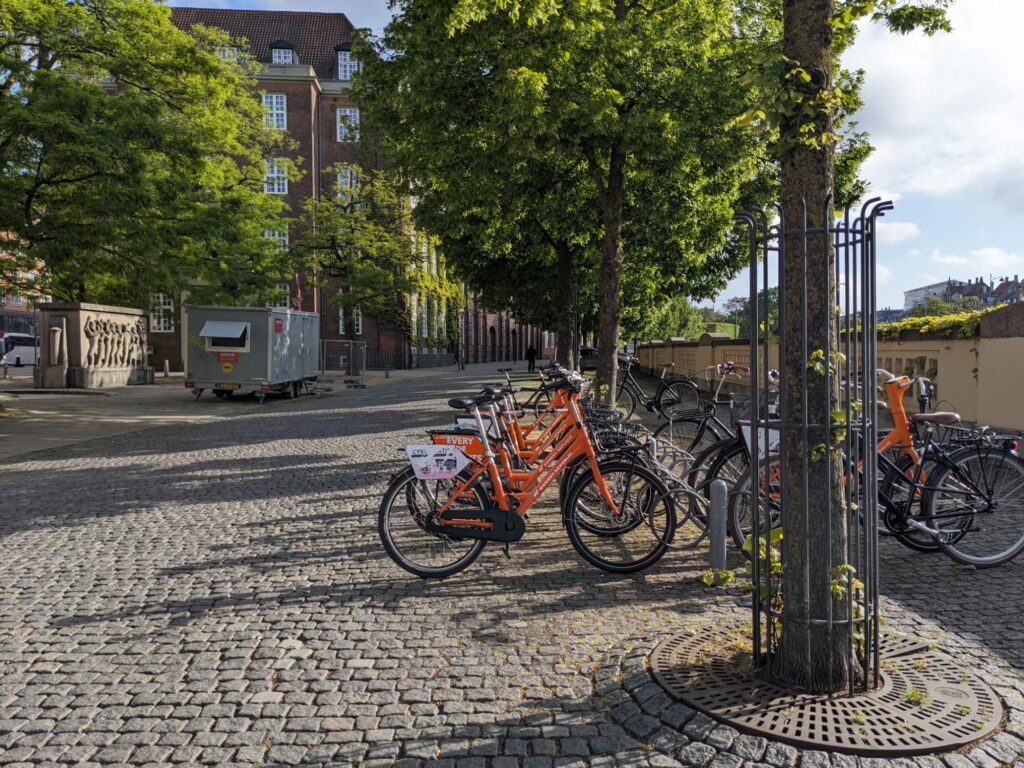
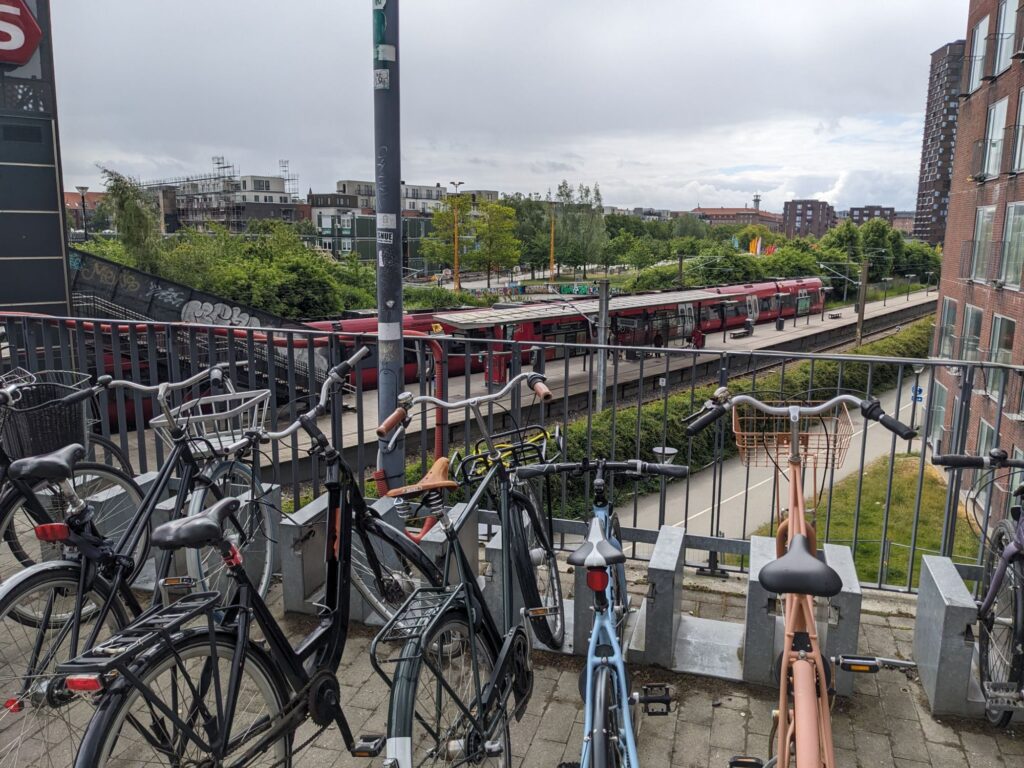
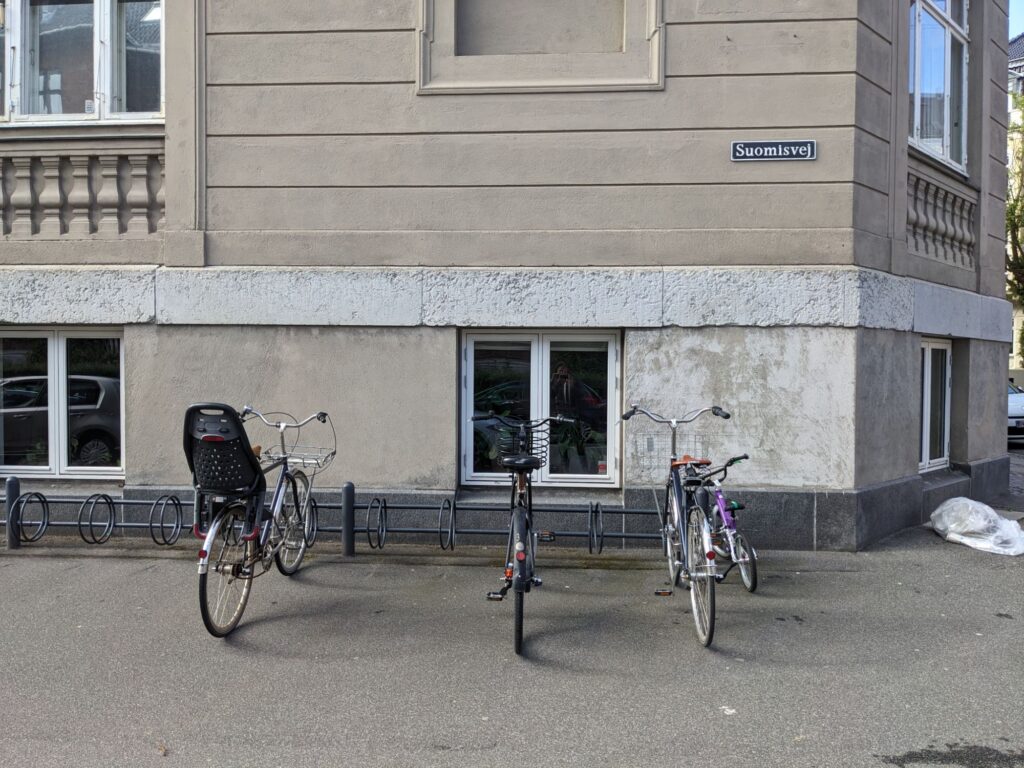
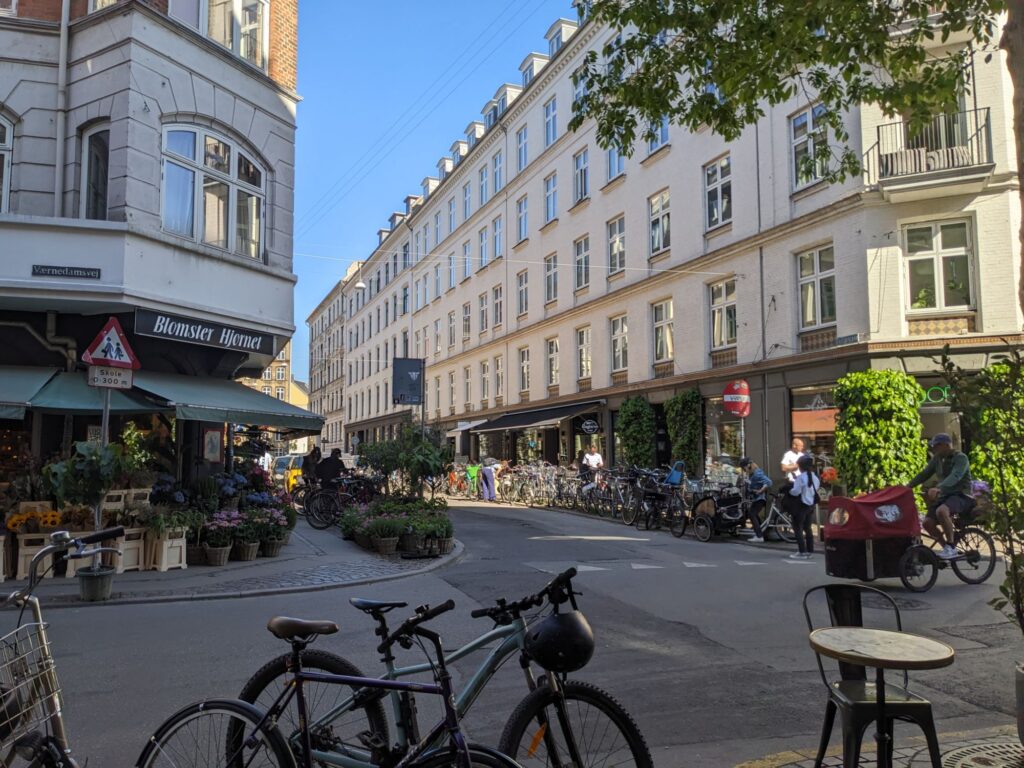
This subtle, exquisite backdrop peppered with micromobility gives Copenhagen its distinct flavor. A parked bicycle, unlike a parked car, gives one the feeling that someone has just been here, that behind every facade there stirs social activity, that if not eyes, there are at least feet on the street. A busy street is a touchstone of a vibrant city.
But vibrancy may not be an end in itself. To wit, the bustle of 6th Avenue is distinct from that of Frederiksberggade– it springs from the American psyche which puts up forcefields and pursues its own happiness. In the United States, and possibly all of North America, we obsess over “rights to” and “freedom to” conduct our business as we wish. Possible legal action hangs like a cloud over every decision. Even the most progressive New Yorkers mistrust a government who can’t keep rec centers open or sidewalks clean. The perception that society doesn’t care for you reflects right back into a carelessness for shared resources. As a result, we see our streets as territories to be fought over, rather than common resources to steward.
But it is also a New York thing to see perfect strangers start a debate about how to get to Penn Station, or linger by the coffee cart for a morning kibbutz, or help each other up some stairs. Kindness is omnipresent, sometimes defiant (see: 9/11). Could it trickle up? Wouldn’t it be great to park my bike on the sidewalk and go into a bodega for a sandwich without thinking twice? Wouldn’t it be great to leave my stroller outside my kid’s preschool and rest assured it’ll still be there in the afternoon? Wouldn’t the mere presence of an unstolen bicycle signal a defiant kindness that shuts down any encroaching paranoia we feel in the streets?
With these hypotheticals in mind, below I’ve produced a series of images of an imagined New York– one that has passed the inflection point and achieved critical mass in creating a public realm more closely resembling a shared living room than a well-organized conveyor– where trust in strangers is a positive feedback loop– where a culture of care and belonging has taken root in our psyche. Your job as viewer is to fill in the gaps between that future and the present.
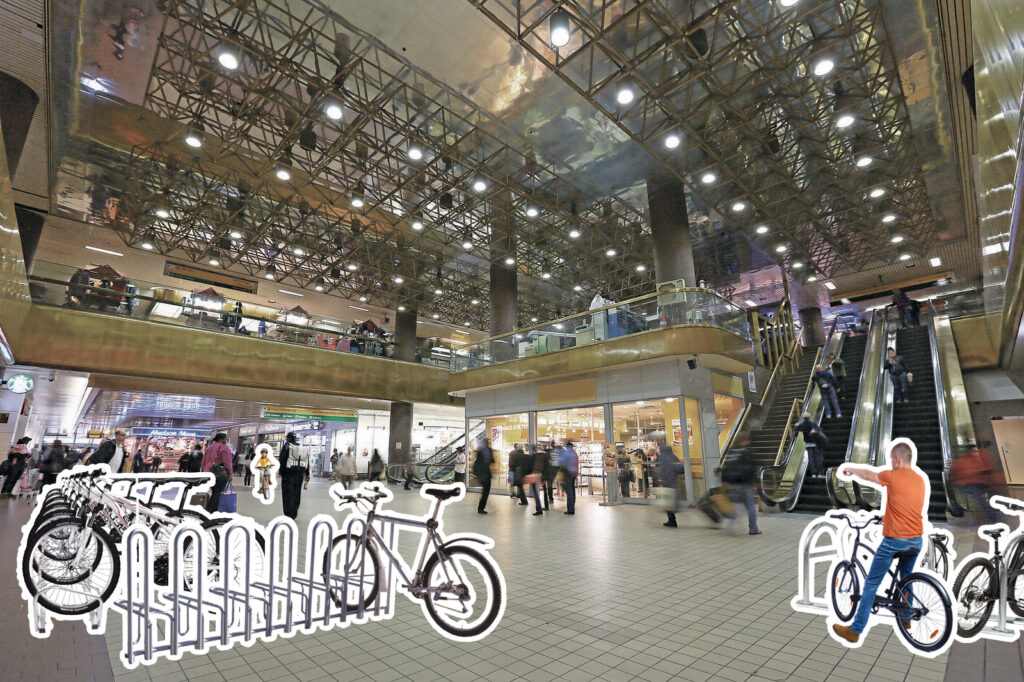
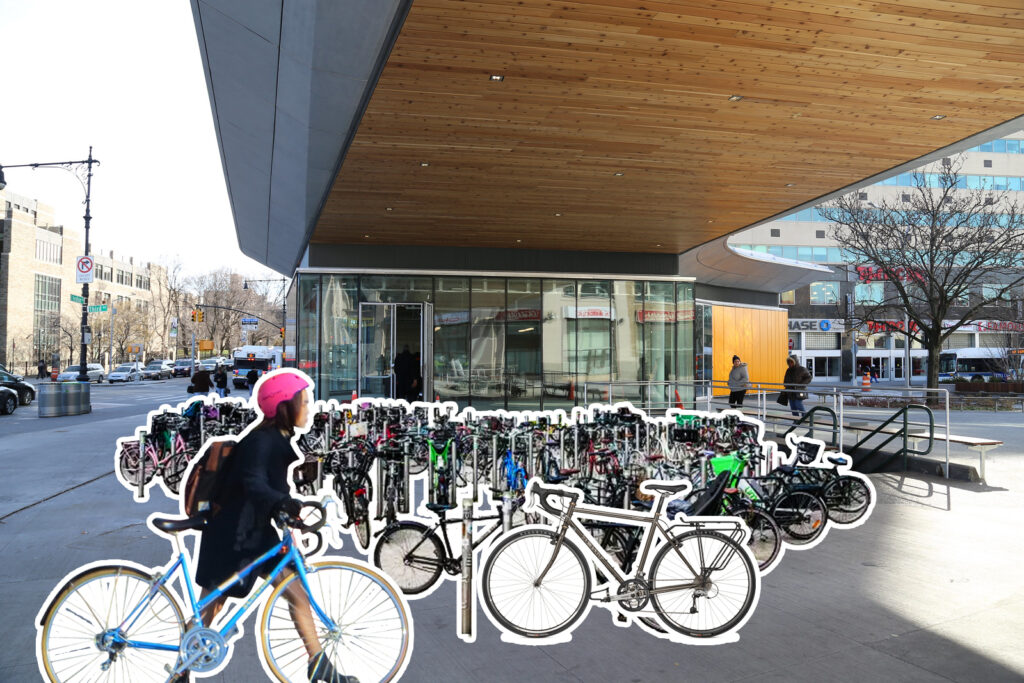
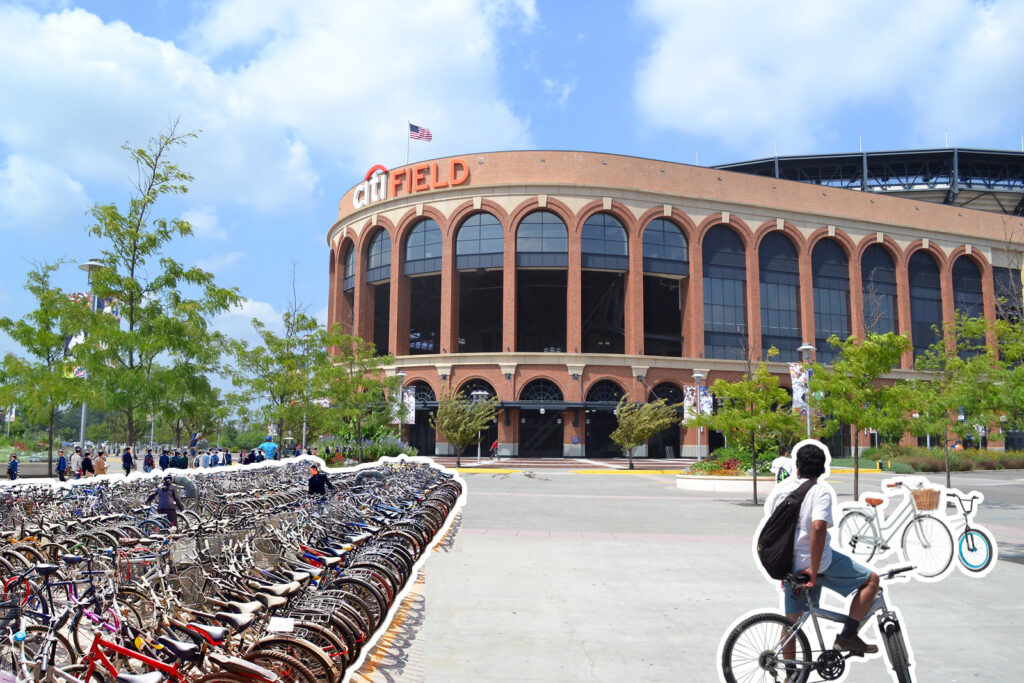
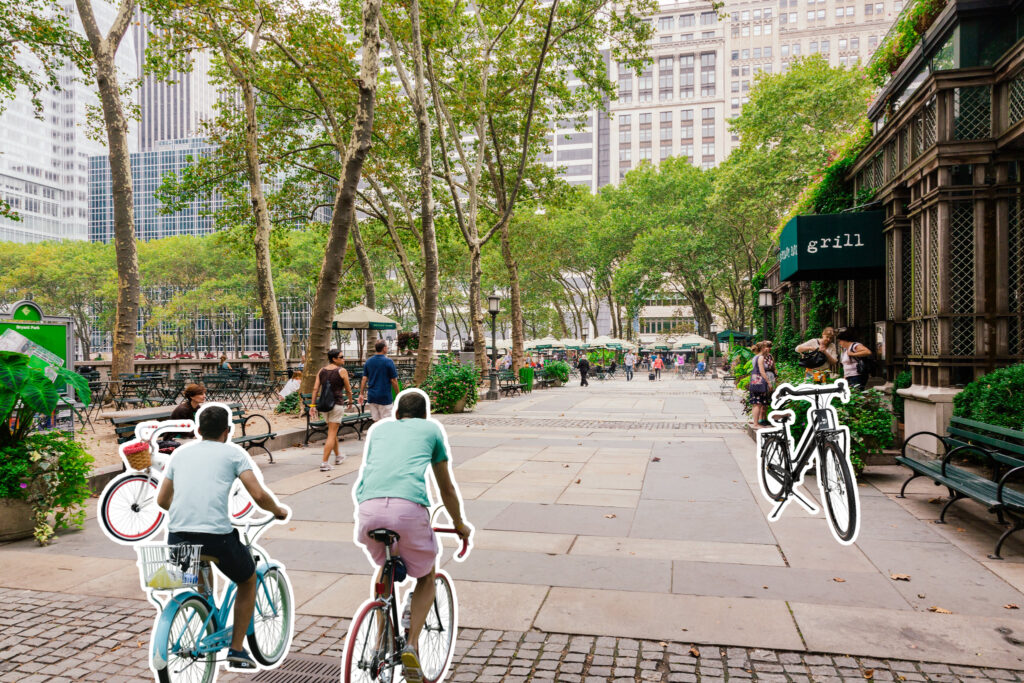
Let’s call this theory fixed windows, or even, parked bikes.
Follow up on August 28th, 2025: in one of my first forays into AI image generation, I used Perchance to create these images, perhaps more uncannily convincing, of the same scenes above.
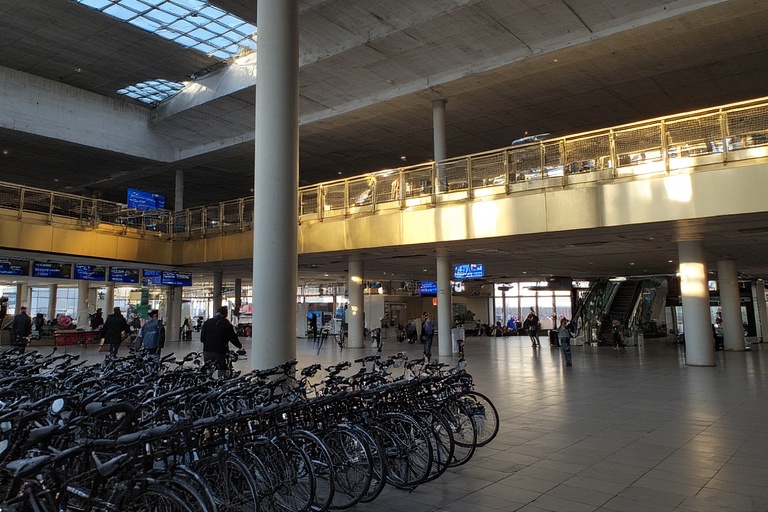
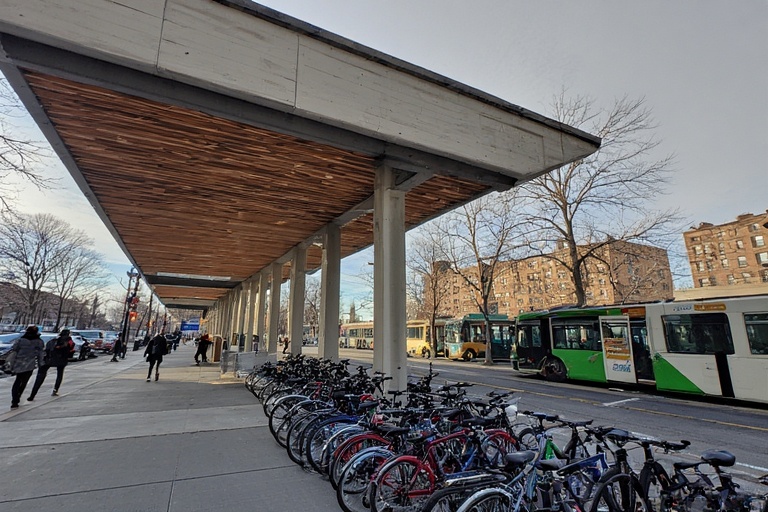
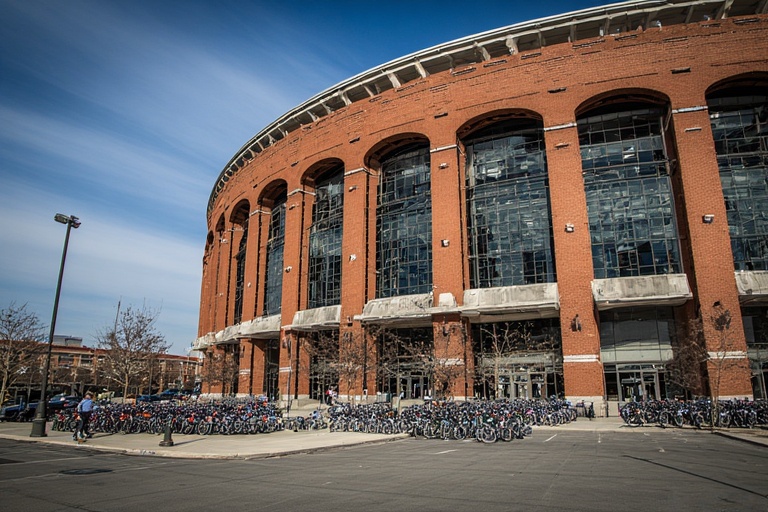
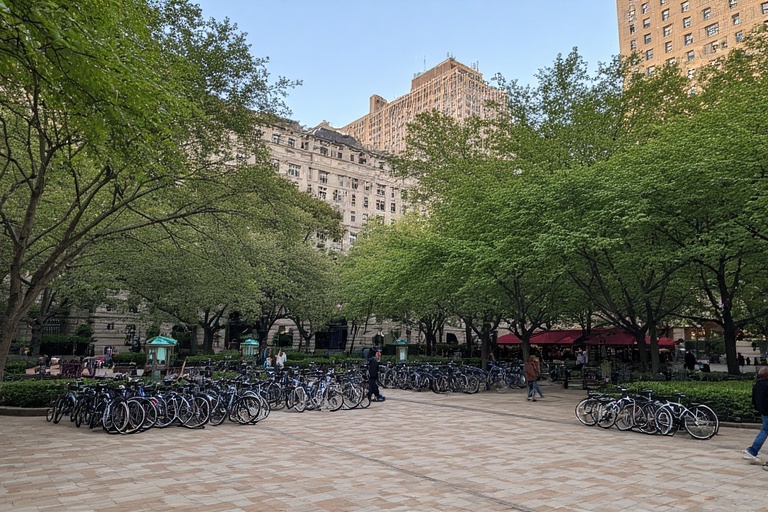
Space for Children
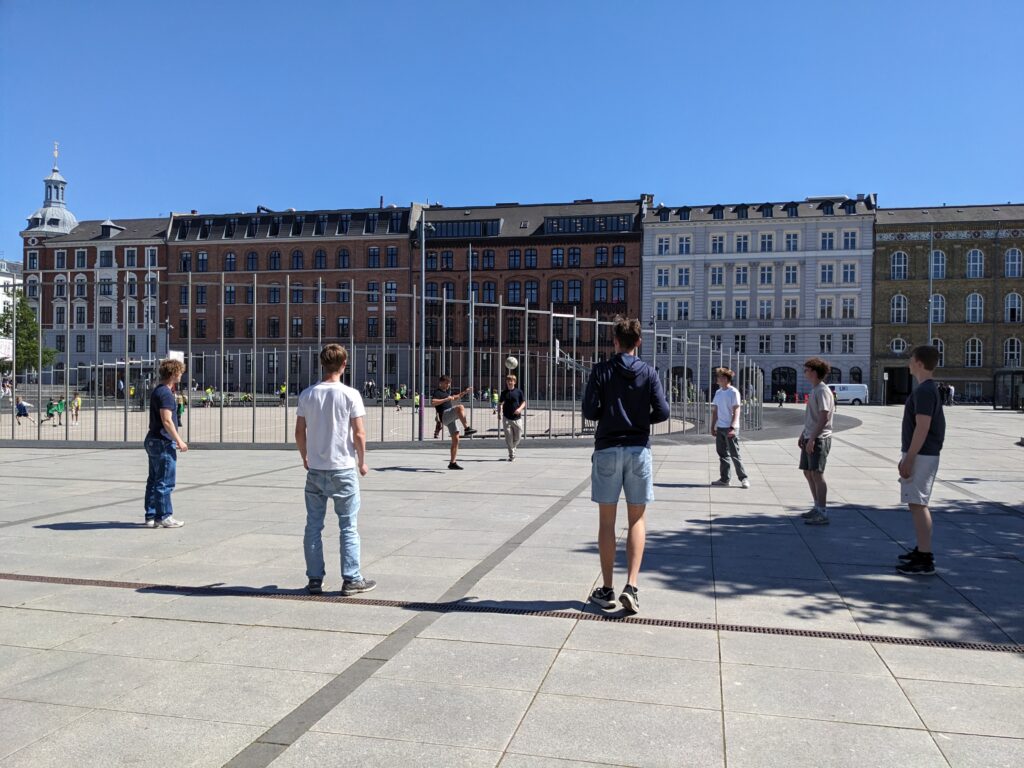
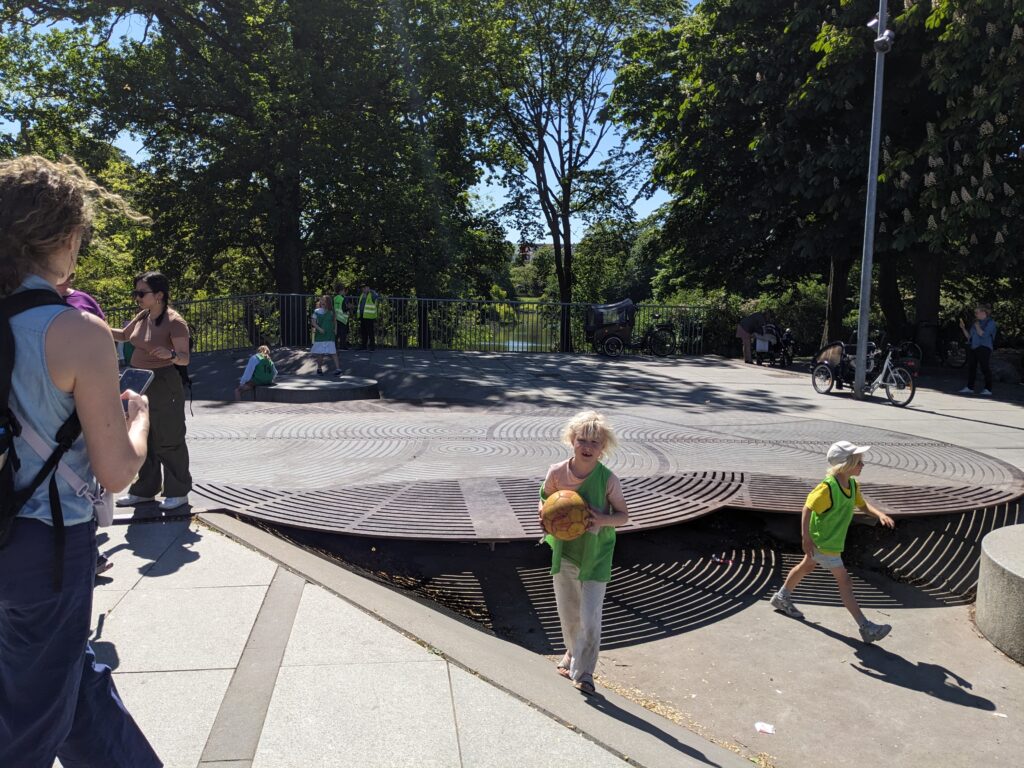
Israels Plads is one of Copenhagen’s central, most active plazas. It is a 2-minute walk from city hall, surrounded by old mid-rise buildings, and as recently as the 2010s it used to be a large car park. Now, its southern half is a paved plaza open exclusively to pedestrians and is one of the poster success stories of the city’s people-based revival over the past 30 years.
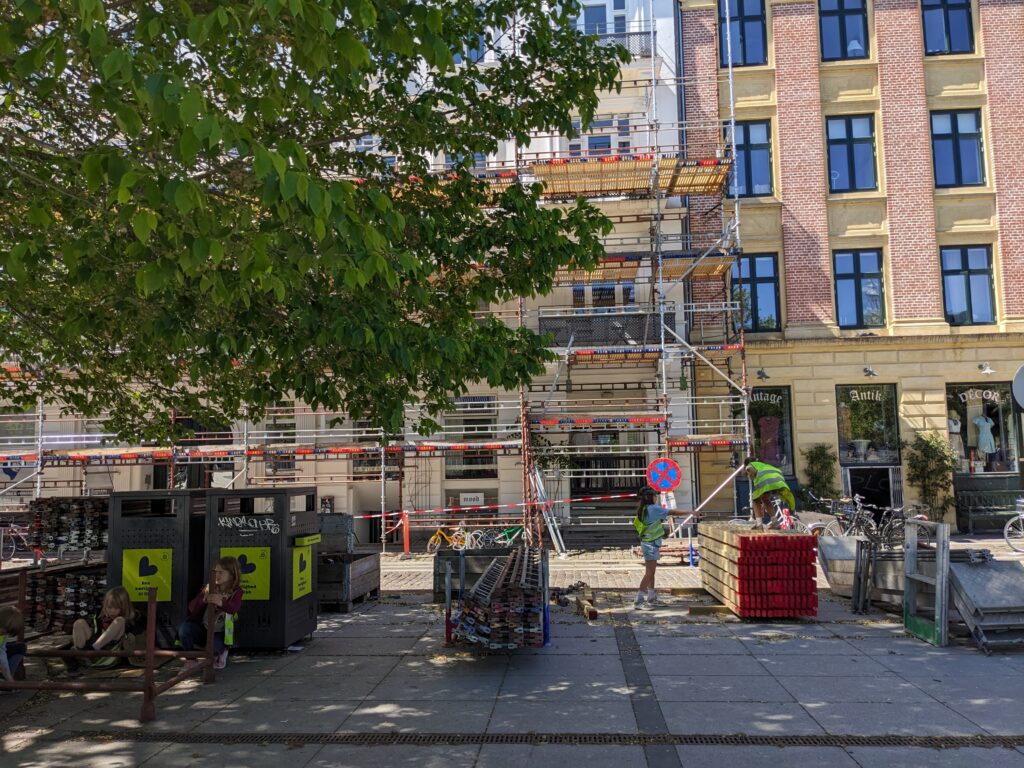
We lingered there on day one of our trip. Between descriptions of how schoolchildren from the multiple adjacent schools used the plaza, I simply observed how those children used it. Despite the broad range of ages (teenagers to toddlers) and organized group play they engaged in (football to tag), the most interesting thing to me was a small group of children off to the side, under an elm, playing among a scattered cluster of construction equipment. The neighboring building had staged some materials in the park for a renovation project, and on a Tuesday afternoon there were no laborers in sight, just five children in day-glo vests. Two climbed a stack of pallets, two rummaged in a polyethylene bag of waste materials, and one simply sat. In the dirt. Against a garbage bin. Under the tree. He had a slightly bored, slightly hypnotized look on his face. One hand was idly pawing at the soil, but otherwise he was doing, by all accounts, nothing. It wasn’t productive time, it wasn’t learning time, it wasn’t even social time. But it was his time. In envy, I couldn’t take my eyes off him.
Idle time is another word for time to oneself. In a world dominated by optimization, where even playtime is thought about the way a poker player envisions gambling (just numbers and calculated bets), this kid was with a simple gesture enacting the thing that truly makes childhood special: the time to be in the world the way you want.
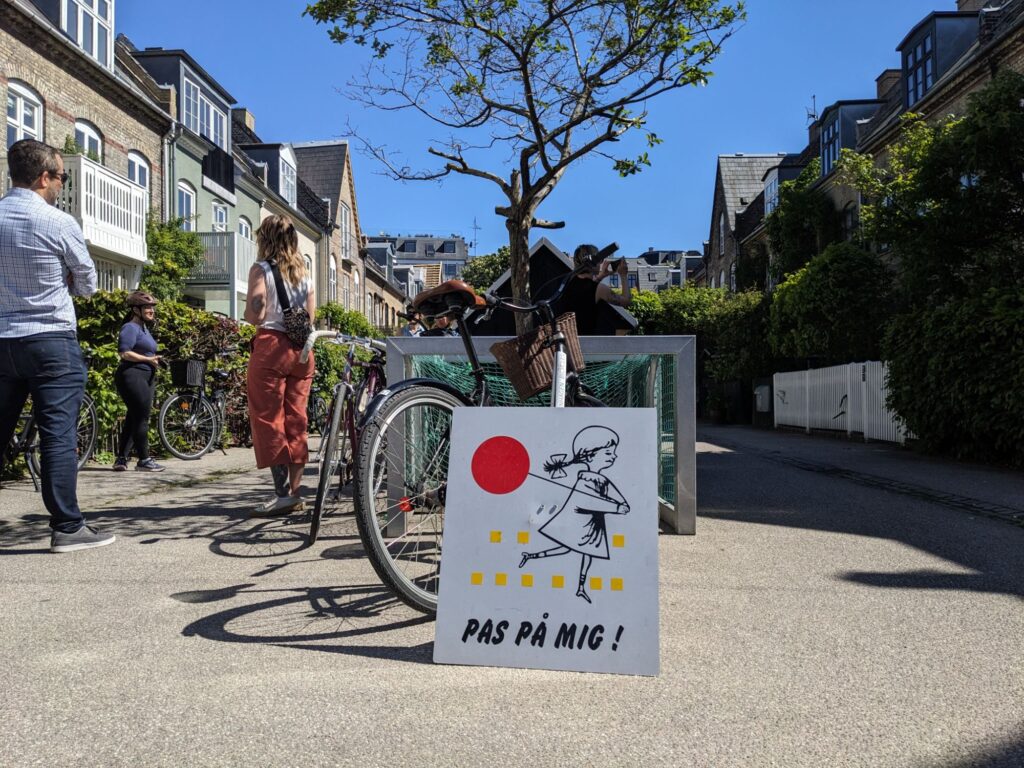
Later on, on the way to Østerbro. we stopped by a street among the Kartoffelrækkerne (a.k.a. the “Potato Rows”)– old 19th century townhomes built in neat rows along Copenhagen’s lakes which nowadays fetch eye-watering prices on the market. Between each row of 3-story houses is a modest street which in 20th century parlance would fit 2 car lanes. Instead, the cross streets are remarkably tranquil, with narrow low-curb sidewalks and– in the middle of the asphalt– play space for children. In most exclusive low-density residential neighborhoods, space for children to play would be nervously tucked away behind a fence as far from the streets as possible. But here, a big gamble has paid off where the motorists have to confront a different type of urban character in very close quarters, which notably impacts how they drive through. The one car that we witnessed was inching along as slow as a delicate foot on a manual transmission pedal could manage, waiting for us cyclists to clear the way, then inching further along until they passed the wooden playhouse and a sign saying “Pas på mig”, or “Take care of me.”
In a relatively pluralistic country like the U.S.A. our notions of designing for all has been colored by well-meaning but short-sighted strategies like “designing to the average.” For hundreds of years we continually invoke the image of the common man to underpin universality in the design of our built environment. But over time its limitations have become clear: if you design things such as chairs, stair flights, or bus routes to fit the statistically average male, you actually end up missing a majority of people entirely– a phenomenon well captured by Caroline Criado Pérez in her book Invisible Women. Being a father and having committed myself to child-rearing parity in the household, Copenhagen helped me envision how redefined notions of “accessibility” and “universal design” look in cities, beyond simply adhering to ADA standards. Copenhagen’s definition turns the image of strictly neutral statistics inside out, revealing quite the opposite: the specific case, the human case, the case simultaneously most universal and most marginalized– that of parents and children. Designing intergenerationally should be our first unshackling.
